Bitcoin
The 21 million ceiling is a rule every node enforces, not a promise anyone made. What the halving curve does to miner income.
CappedProof of work
The archive · compiled August 2026
Fourteen records, each one answering the same six questions about a single asset, and each built around the one mechanism that makes it different from the other thirteen. Every figure traced to a project's own documentation or to the chain, with the month it was checked.
Same six headings every time: what it is, who builds it, how the token works, what it is used for now, the factual risks, and where it trades. The order never changes, so you can read across records without hunting.
Bitcoin
The 21 million ceiling is a rule every node enforces, not a promise anyone made. What the halving curve does to miner income.
CappedProof of work
Ethereum
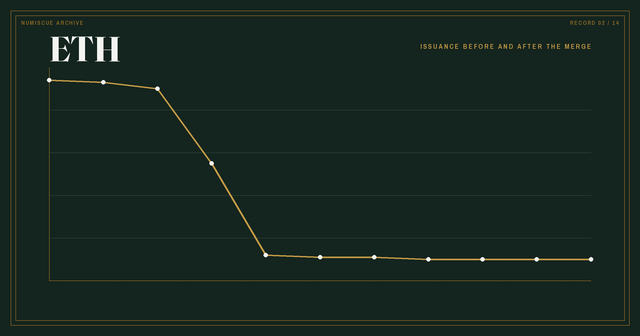
Issuance and burn run in opposite directions at the same time. Net supply can be positive or negative, which is not what “deflationary” means.
UncappedProof of stake
BNB
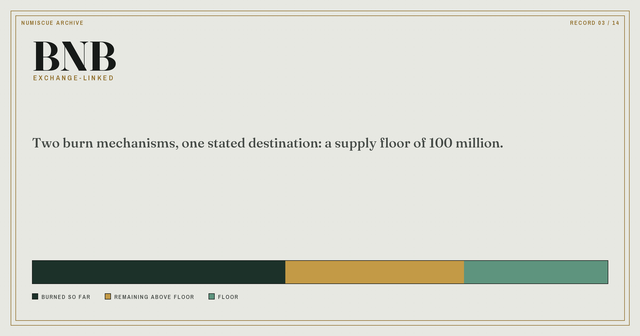
Two separate burn mechanisms walking supply toward a stated floor, and an unusually direct tie between a token and one company's business.
Burn to floorExchange-linked
Tether
An attestation and an audit are different documents that answer different questions. This record is mostly about that distinction.
Fiat-referencedAttested
USD Coin
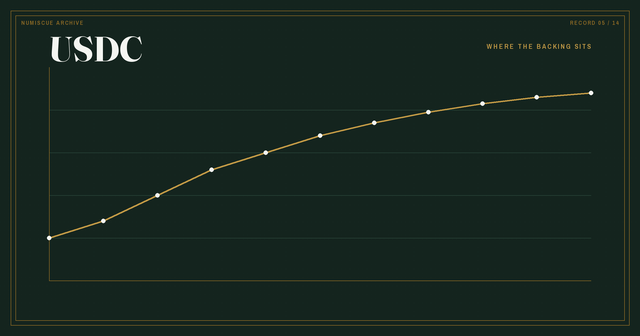
Same peg as Tether, different issuer, different reserve vehicle, different redemption path. The differences are structural, not cosmetic.
Fiat-referencedFund-held
XRP
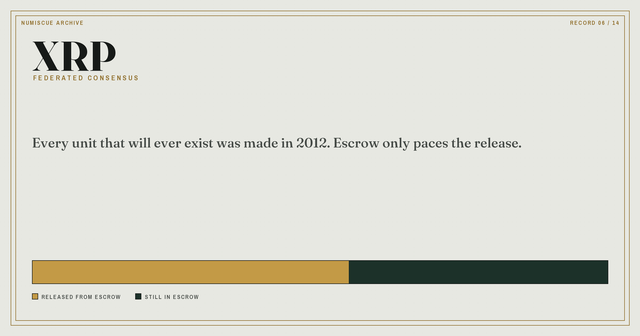
Every unit that will ever exist was made at once. Escrow controls the pace at which it can reach the market, and the queue refills from the back.
Fixed at creationEscrowed

Solana
A published inflation curve with a starting rate, a decay rate and a floor — plus an open proposal to make the decay twice as fast.
DisinflationaryProof of stake
Dogecoin
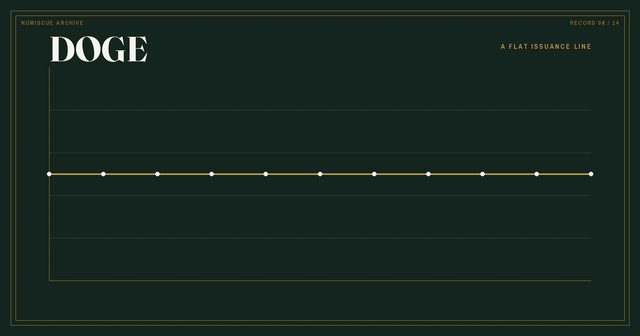
No maximum supply at all. Most introductions step around that; this one explains what a permanent fixed issuance actually does.
No maximumProof of work
TRON
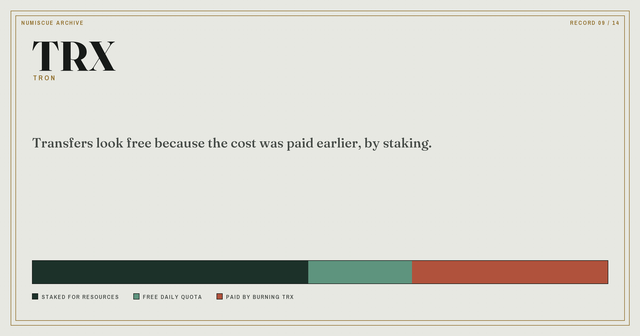
Transfers that look free because the cost was paid earlier, by staking. Bandwidth, Energy, and what happens when you have neither.
Resource modelDelegated PoS
Chainlink
Node operators are paid in LINK for work they publish. Where that working demand ends and speculative holding begins is the whole question.
Capped 1BOracle network
Avalanche
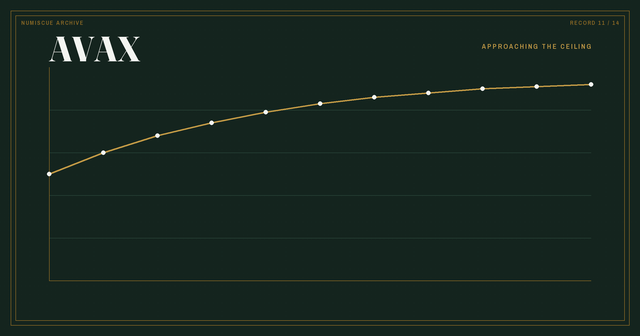
Three chains in the Primary Network plus independent L1s. For a holder the practical question is which chain the balance is sitting on.
Capped 720MMulti-chain
Polkadot
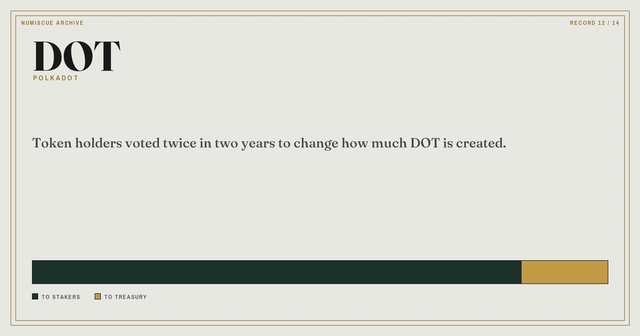
Most of the supply is staked and cannot leave quickly. Token holders have also voted twice in two years to change how much DOT is created.
28-day unbondGoverned issuance
Toncoin
A distribution channel most chains would envy, and a dependency most chains do not have. The same relationship explains both.
Emission and burnProof of stake
Cardano
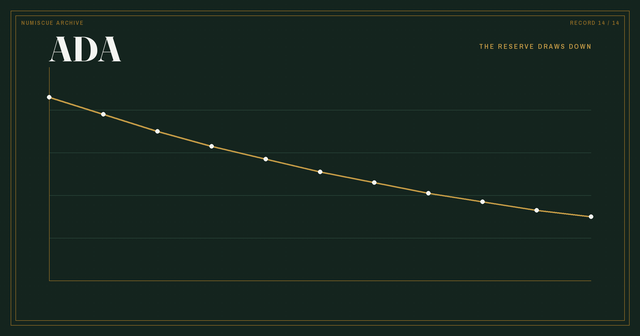
A reserve that only ever drains, feeding rewards and a treasury, and a roadmap of named eras — recorded here strictly by what has shipped.
Capped 45BProof of stake
Longer pieces that teach you to read any token, not just the fourteen in here. Every record links back to the first one, because the vocabulary comes from there.
How to read a token's supply and emission schedule
Total, max and circulating supply are three different numbers. Market cap and fully diluted valuation are two more. Confusing them is an easy way to misread a project.
Layer 1 vs layer 2: what the difference costs you
Starts from the fee you pay and the wait you sit through, then works backwards to the architecture. Includes why the same coin on two chains is not interchangeable.
Stablecoins: what actually backs the big ones
Three structures that all claim one-to-one backing and mean different things by it. What the backing asset is, who holds it, and whether you can actually redeem.
Buying your first token: from account to storage
Verification, deposit costs and choosing the right pair are only part of a first purchase. The last step is deciding where the coins live, and who holds the keys.
Reference tables and one identifier. None of them quote a price, and none of them pretend to be live: where a figure moves, the page says when it was taken and where to check it.
Which of the fourteen have scheduled releases, arranged by month, with a source link on every row.
Block timing, how finality is reached, what it takes to take part, and the known trade-offs. No ranking column.
Fourteen assets, sortable: maximum supply, issuance model, burn mechanism, release schedule.
Flat fee, gas auction, rented resource. The model is the part that stays true when the price moves.
Which chain might this address format belong to?
Paste an address, get the chain and an explanation of why that chain's addresses look the way they do. Runs in your browser.
Every figure on this site had to be traceable to a project's own documentation, its source code, or a public block explorer before it was allowed onto a page. Where a claim could not be traced, the field is simply missing rather than filled in from a secondary source. There are a few of those, and they are noted where they occur.
Anything that moves — circulating supply, staking participation, fee levels — is written as a magnitude or a range with the month it was checked, and a pointer to where you can see the current number. Nothing here is a live feed dressed up as one.
There are no price predictions in this archive, no view on whether anything is worth buying, and no scores. The risk section on each record lists facts and stops there. If you want to know what a token is and how it works, this is the right place. If you want to be told what to do with it, it is not.
Who writes this · What has been corrected · How it is paid for