Sending USDT from a self-custody wallet uses the network’s fee system: ETH on Ethereum, BNB on BNB Smart Chain, Energy and Bandwidth on TRON, and SOL on Solana. Holding USDT alone does not pay those costs. An ordinary Ethereum transfer can therefore fail when the wallet shows plenty of USDT but no ETH. Resources, a separate fee payer or a supported gas sponsor can change what you personally need to hold.
The rule sits in each chain’s protocol, and the token issuer has no say in it. What differs from chain to chain is how the charge is measured, whether anything other than the native coin can cover it, and who else might pay on your behalf.
Why a USDT balance cannot pay for its own transfer
On Ethereum, sending ETH and sending an ERC-20 token are different kinds of transaction. Sending ETH changes two account balances that the protocol itself keeps. Sending USDT is a call to the transfer function of the token contract, which then edits its own internal ledger; the token standard guide walks through that ledger. From the chain’s point of view, the token is data held by a program, and the program has to be executed.
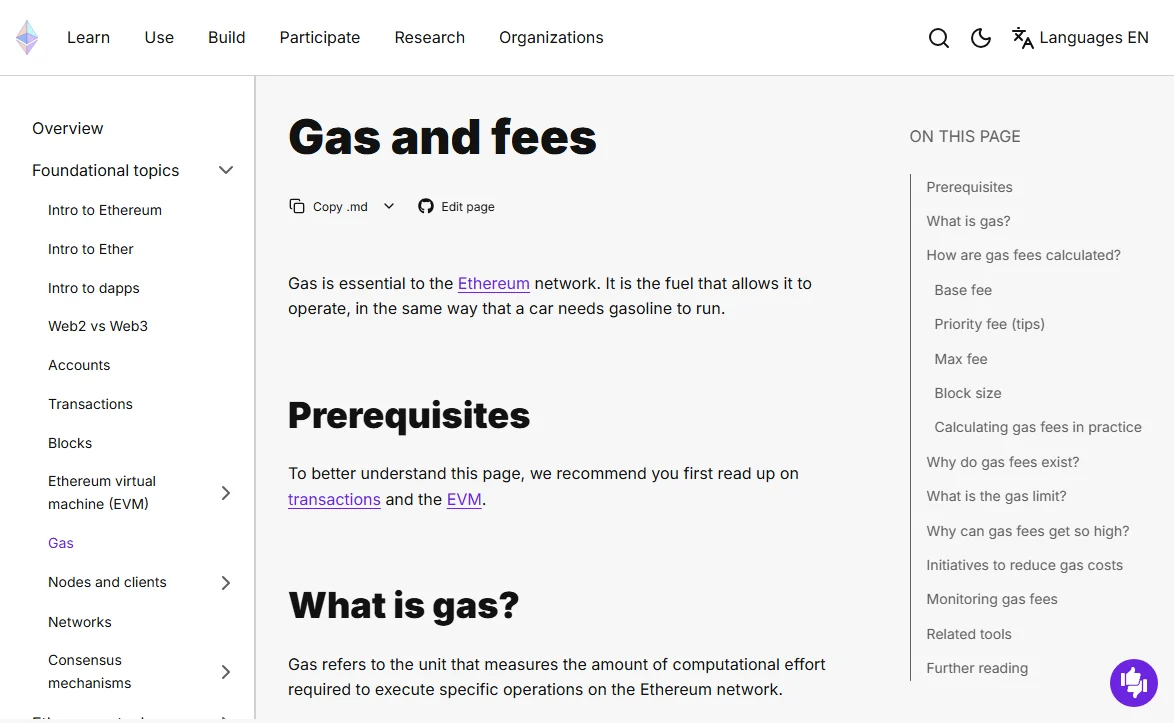
Execution is measured in gas. Ethereum.org’s gas page is blunt about the currency: “Gas fees have to be paid in Ethereum’s native currency, ether (ETH).” The execution fee is gas used × (base fee per gas + effective priority fee per gas). The base-fee portion is burned when the block is made — the mechanism behind the burn side of the ETH supply record. A plain ETH transfer without contract execution uses 21,000 gas units. A token transfer runs contract code on top of that, so it uses more gas; the total ETH fee also depends on the gas price when it is included.
Two consequences surprise people. A transaction that runs out of gas partway through still uses up the gas it was given, because the work was done. And the USDT contract has no way to accept payment for gas in USDT: the fee is settled by the protocol, outside the contract, before the contract’s own rules even come into play.
BNB Smart Chain copies the arrangement with a different coin. BNB Chain’s own description says BNB “will serve as both the gas of smart contract execution and tokens for staking.” A BEP-20 USDT transfer therefore needs BNB in the same address. The same logic holds on Ethereum rollups that price gas in ETH: the ETH has to be on that rollup, because ETH sitting on Ethereum mainnet is a balance on a different ledger. The layer 1 vs layer 2 guide covers why.
TRON: Energy and Bandwidth before TRX
On TRON, a USDT transfer can consume available resources without burning TRX, or burn TRX when resources fall short. Every transaction consumes Bandwidth according to its size in bytes. TRC-20 transfers also consume Energy for contract execution. Instructions have base Energy costs, but TRON’s dynamic Energy model can raise the effective cost of heavily used contracts; the total is not always just the sum of the base instruction costs.
Both resources can come from staked TRX: an account stakes for either Bandwidth or Energy and receives a share of that resource, which can also be delegated to another account. The documentation adds that, under the current model, each TRX staked this way also grants 1 TP, TRON’s voting weight. Each account also gets up to 600 free Bandwidth over a rolling 24-hour window, subject to the network-wide free quota. Available Energy can cover part of the caller’s cost, with TRX burned for the rest. Bandwidth is different: staked or delegated Bandwidth must cover the entire transaction, otherwise free Bandwidth must cover it all; if neither can, TRX is burned for the full Bandwidth cost.
A USDT transfer still needs Energy even when the wallet shows no TRX charge. The caller must cover its Energy share and the transaction’s Bandwidth through available resources or a TRX burn. A contract deployer can cover some Energy when its settings and resources allow; that does not cover the caller’s Bandwidth. The transaction’s fee_limit caps the caller-side Energy budget, “including both available Energy and the portion paid by burning TRX.” The TRON record follows where those resources come from.
Solana: the fee, and sometimes an account for the recipient
Solana charges in SOL, counted in lamports (one SOL is a billion lamports). The base fee is 5,000 lamports per signature, split half burned and half to the validator; an optional priority fee goes entirely to the validator. A simple token transfer with one signature therefore has a base cost of 5,000 × 1 ÷ 1,000,000,000 = 0.000005 SOL before any priority fee.
The less obvious cost is storage. Each token account holds one mint, but a wallet can control several accounts for that same mint. Wallets commonly use an associated token account (ATA), the default account for a wallet, token program and mint. If the recipient’s required token account is absent, it must be created and funded with a refundable minimum SOL balance. The creation payer can differ from both the recipient and the transaction’s fee payer. When you fund creation, that transfer needs extra SOL. The minimum depends on account size, including Token-2022 extensions. Closing an empty account releases its SOL to the specified destination; it does not automatically refund the original payer.
Four chains side by side
| Chain and token format | Charged in | Can something else cover it? | Holding only the token |
|---|---|---|---|
| Ethereum, ERC-20 | ETH (gas) | A supported paymaster or sponsor pays ETH on your behalf | An ordinary self-paid transfer fails without ETH; supported sponsorship can cover it |
| BNB Smart Chain, BEP-20 | BNB (gas) | A supported sponsorship flow; the chain still receives BNB | An ordinary self-paid transfer needs BNB; sponsorship depends on the wallet and service |
| TRON, TRC-20 | Energy and Bandwidth, with TRX burned for uncovered charges | Staked or delegated resources; deployer Energy sharing where configured | No TRX burn is needed if resources cover both the caller’s Energy share and the full Bandwidth cost |
| Solana, SPL | SOL (fee, plus account deposit when needed) | Whichever account is named as payer | Cannot be sent unless some payer holds SOL |
The fee models reference table compares how each chain prices its space; this page is only concerned with which coin settles the bill. If you are unsure which network an address belongs to, the address format checker narrows it down from the shape of the address alone.
How an exchange pays the on-chain withdrawal fee
Withdrawing USDT from an exchange works without the customer holding any ETH, BNB or TRX, and the reason is custody. Your exchange balance is an entry in the exchange’s books. When you withdraw, the exchange sends the tokens from its own on-chain address and pays the network fee from its own native-coin balance on that chain. It then recovers the cost from you through a withdrawal fee. Kraken’s fee page describes it as “a fee to cover the transaction costs” and warns that fees may change, with the final figure shown at confirmation.
That fee is the platform’s price, set by the platform; the network charges the exchange separately. It also explains why the same USDT withdrawal can cost different amounts on different networks: the exchange is paying a different chain, in a different coin, each time. Once the tokens land in a self-custody wallet, the exchange no longer handles the next transfer’s network cost. Your wallet must cover it with the required coin or resources, or use a supported payer or sponsor.
Before withdrawing to a wallet you control, check how that wallet pays for its next transfer. Without the required native coin, resources or a supported sponsor, a visible stablecoin balance may be unable to move. Any native coin used to pay must be available to the fee-paying account on the same network as the transfer.
Can gas be paid in USDT? What a paymaster changes
Partly, on Ethereum and chains that adopt the same standard. ERC-4337, now marked Final, introduces account-abstraction wallets and a role called the paymaster. Its stated aims include letting users “pay tx fees with ERC-20 tokens” and allowing developers to pay fees for their users.
The chain’s rule stays intact. The paymaster must keep enough ETH deposited with the EntryPoint contract to cover the operation’s gas. A service accepting USDT charges tokens under its own terms while funding that ETH cost. The wallet and paymaster must support the same flow; holding USDT alone does not establish eligibility. Compatible smart accounts can include key-controlled accounts using EIP-7702 delegation, which the current ERC-4337 specification supports. A basic transfer from an account without that setup still needs its own ETH.
Under ERC-4337, an app can also sponsor gas without charging you. The paymaster still funds the EntryPoint deposit in ETH.
Sources read on 18 October 2026: Ethereum.org, gas and fees (page dated 24 June 2026); BNB Chain, BNB Smart Chain overview; TRON developer hub, resource model and resource charges, Energy sharing and dynamic Energy; Solana docs, fees and tokens, including the linked account creation and payer details; ERC-4337; Kraken, cryptocurrency withdrawal fees and minimums. Fee amounts, free allowances and resource rules are set by each network and can change through upgrades.